 The Field Guideby Moss & MarrowThe Field Guideby Moss & Marrow
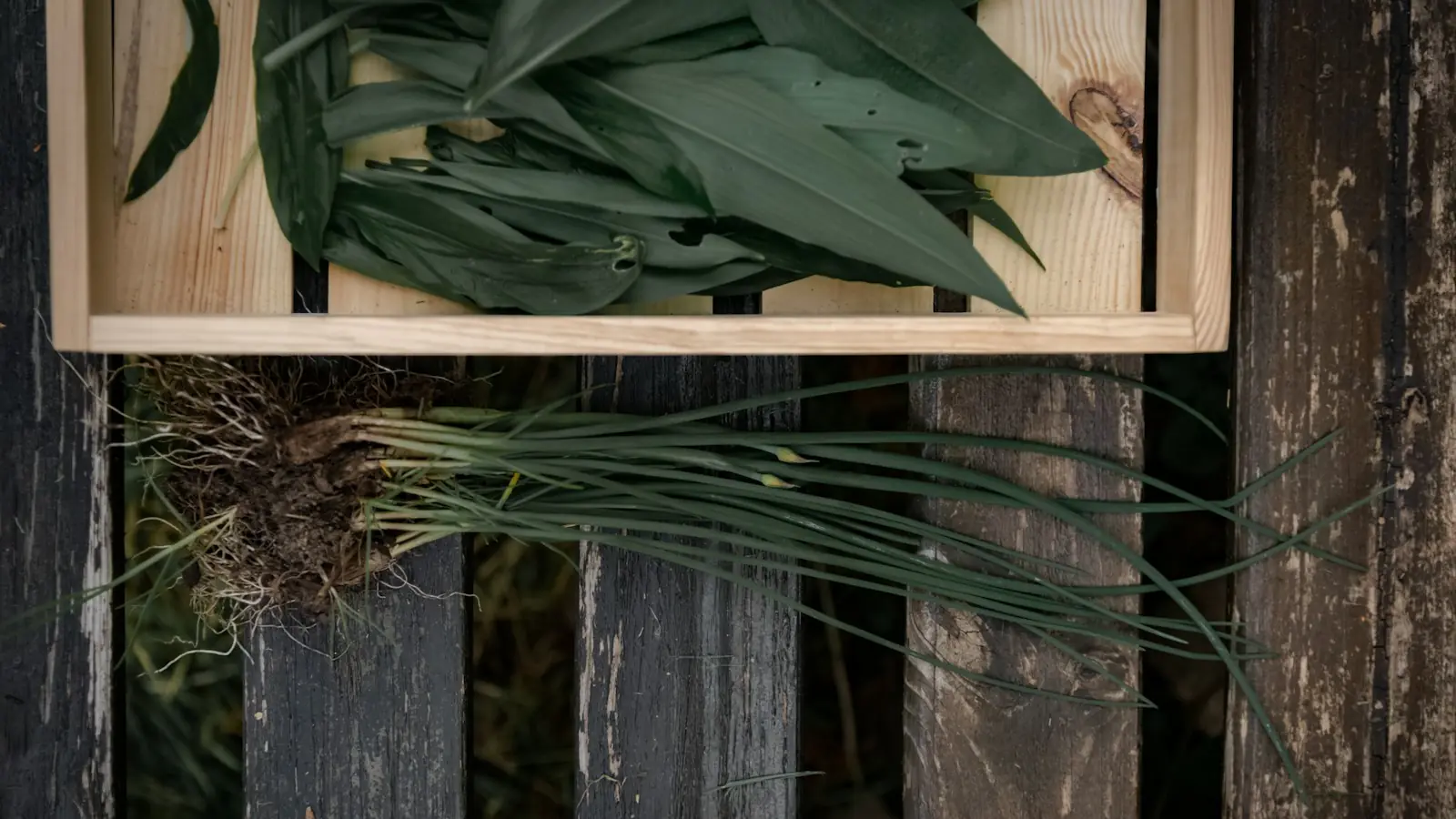
Also called ramsons, berenlook.
In the Netherlands, wild garlic is in season March to April, at its best in April. November is outside the Dutch season for wild garlic.
Wild garlic carpets damp, shady woodland in March and April, before the trees leaf out, and is gone by May. A few growers sell it at farmers' markets in those weeks. In the Netherlands you may pick small amounts for your own use in most forests and along most paths, about a punnet's worth, and never dig up roots or bulbs. Nature reserves, dune areas and many Natuurmonumenten and Staatsbosbeheer sites forbid it, and the sign at the entrance is the rule that counts. Commercial picking is forbidden everywhere.
Smell it: wild garlic leaves smell of garlic when rubbed. Lily of the valley and lords-and-ladies grow in the same places and do not. Pick the leaves, never the bulbs.
Vitamin C, iron, magnesium and the sulphur compounds of garlic.
To get the most: Raw keeps the vitamin C and the sulphur compounds; cooking loses most of both.
Content per NEVO, the Dutch food composition database. This describes what the food contains, not what it does for you.
Raw in a pesto or chopped into butter; a short wilt in soup. It loses its punch when cooked long.
Leaves, flower buds and flowers are all edible; the buds pickle like capers.
Wild garlic is picked, not bought. The Field Guide lists producers, so it has no entries for a wild food; the page is here so the season and the rules are in one place. Elsewhere on the site, the map shows the farms and shops near you.
Dates read on 2026-10-12. If a window on this page is wrong, tell us with a source.
 guideWhy choose local and seasonal food?Food picked ripe in its own season carries more vitamins, travels days instead of weeks and keeps good farms in business. Twelve reasons, with the evidence.Read the guide →
A free list of what’s in season this month, then one slow email a month with seasonal tips and goodies.