 The Field Guideby Moss & MarrowThe Field Guideby Moss & Marrow
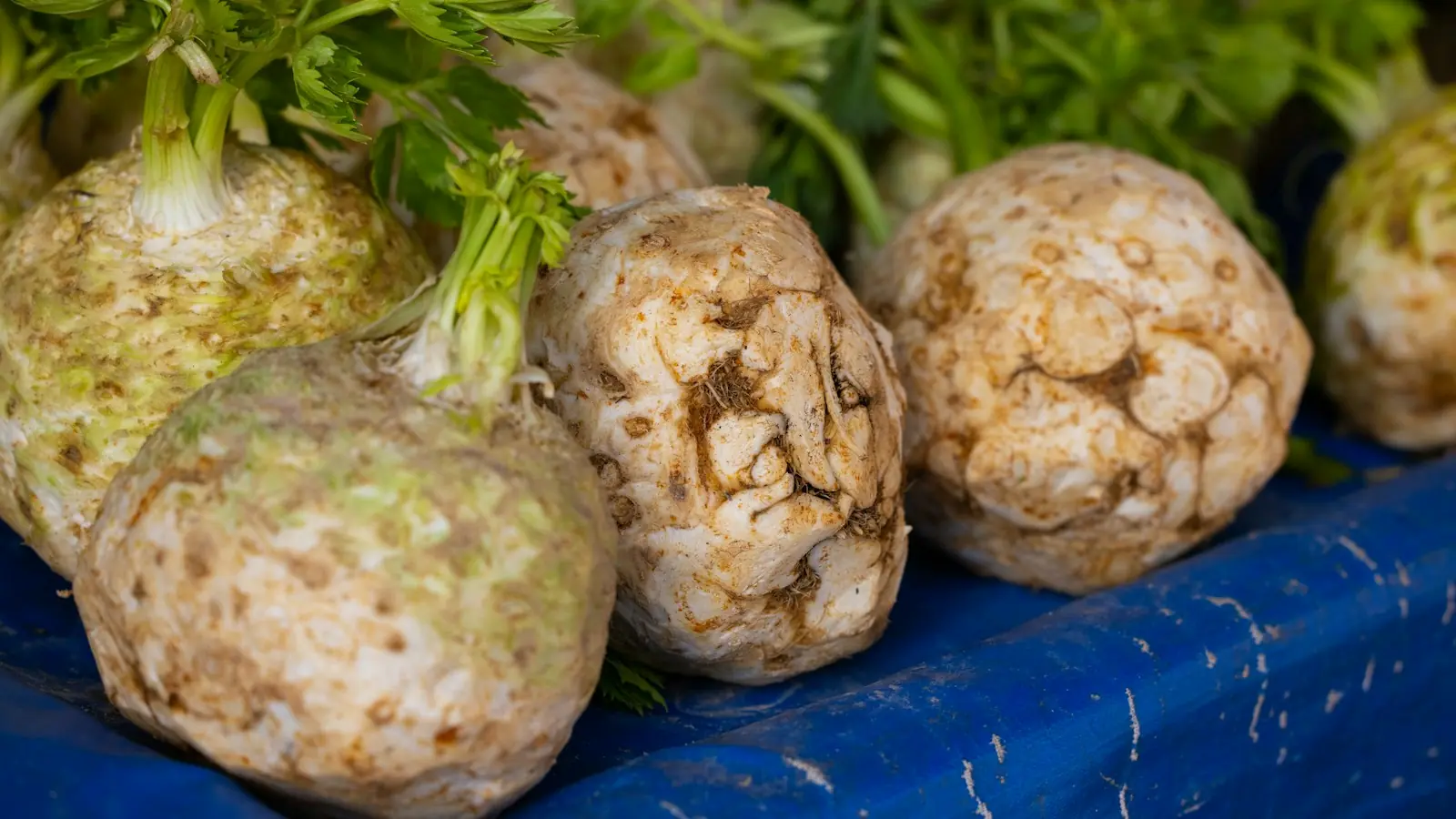
Also called knolselder.
In the Netherlands, celeriac is in season September to December, at its best in October and November. After the harvest, Dutch stores carry it until March. Celeriac is in season now, in November, and this is the peak.
Celeriac is lifted from September to December and stored into March.
Heavy for its size, with as few root tangles as possible.
Vitamin K, vitamin C, phosphorus and fibre, with far less starch than potato.
To get the most: Raw, grated in a remoulade, keeps the vitamin C. Roasted or mashed it keeps the fibre and the vitamin K.
On our nutrient density chart, a normal serving of cooked celeriac (150 g) gives about a third of a day's vitamin K and about a tenth of a day's vitamin B6, counting what your body absorbs.
Content per NEVO, the Dutch food composition database. This describes what the food contains, not what it does for you.
Peel thickly. Roast in wedges, mash with potato, or grate raw for a mustardy remoulade.
Peelings are too earthy for stock, but the leaves and stalks are a strong celery herb. Roast the whole root in its skin.
6 producers in The Field Guide sell celeriac, according to their own website or shop list, each checked against our inclusion criteria and listed by province. Another 172 growers passed our bar for this food group; we have not yet recorded what each of them grows, so ask them or search the map.
Open on the map →Dates read on 2026-10-11. If a window on this page is wrong, tell us with a source.
 guideWhy choose local and seasonal food?Food picked ripe in its own season carries more vitamins, travels days instead of weeks and keeps good farms in business. Twelve reasons, with the evidence.Read the guide →
A free list of what’s in season this month, then one slow email a month with seasonal tips and goodies.