 The Field Guideby Moss & MarrowThe Field Guideby Moss & Marrow
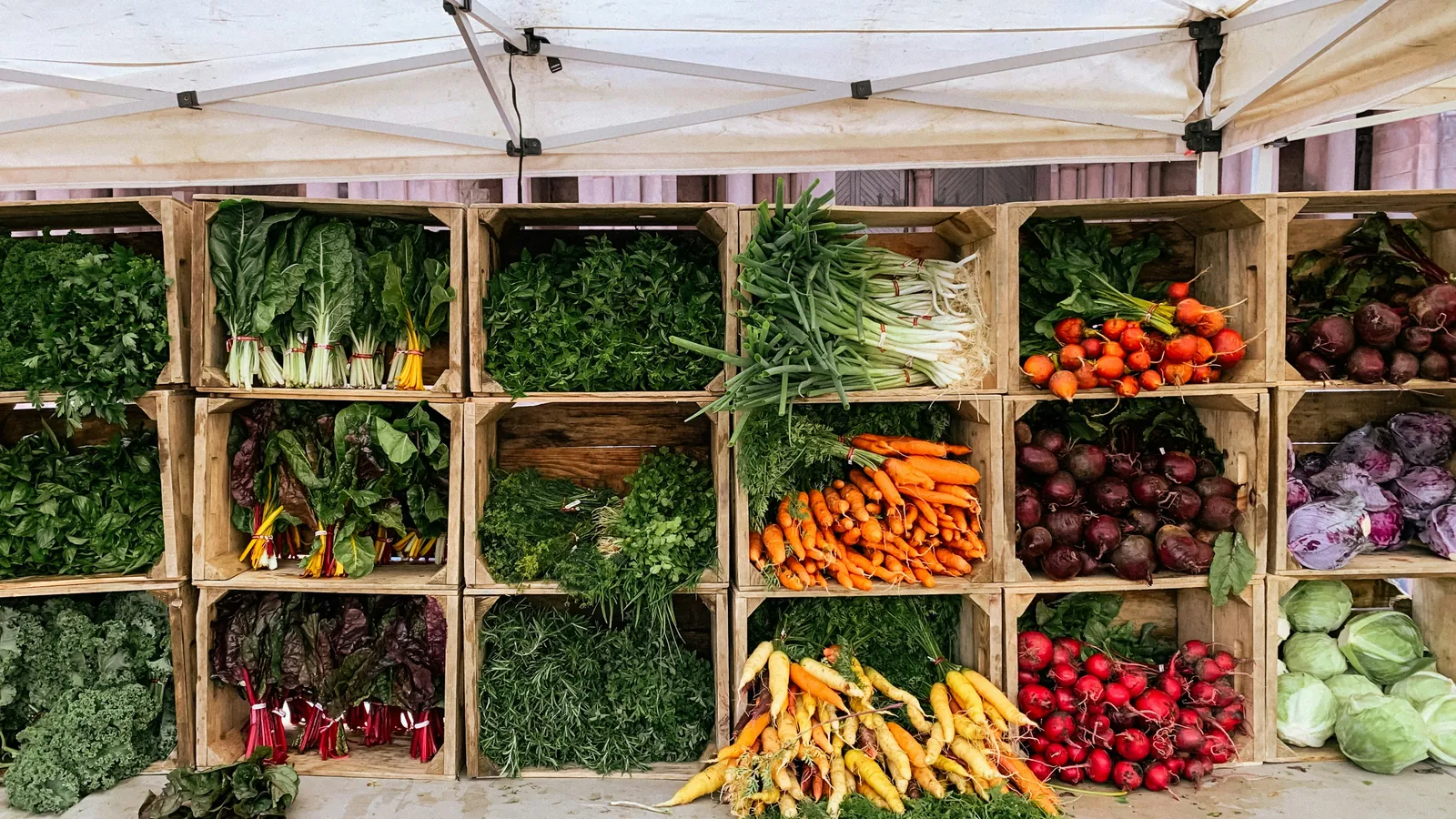
This page is The Field Guide's list of farmers' markets and organic markets in the Netherlands where producers sell their own products, each one checked by us and grouped by province. This page lists farmers' markets (boerenmarkt, streekmarkt) and organic markets (biologische markt). General weekly markets aren't included. We assess each market as a whole, not stall by stall, so markets appear only on this page and not under meat, dairy or eggs.
A market of this kind puts you face to face with the people selling, so you can ask the questions we would: whose food it is, what was sprayed on the land and what the animals ate.
15 producers · every one checked against our inclusion criteria
Open on the map →15 producers across 4 provinces, most of them in Noord-Holland (7), Zuid-Holland (3) and Utrecht (3). Each entry opens the producer's own page with what we checked, when we checked it, opening hours and how to buy; the names are listed by province, town by town, and the map lets you search the same list by postcode.
visited by moss & marrowMarket · AmsterdamVeg & fruit, bread & grain, dairy, mushrooms, herbs, meat, fish, honeyvisited by moss & marrowMarket · AmsterdamA boerenmarkt (farmers' market) is a market where farmers, growers and small producers sell what they have grown or made themselves, such as vegetables, meat, cheese, eggs and bread. Most are held weekly on a fixed day, often outdoors on a town square. The farmers' markets we have checked are on our markets page, with the day and hours where the market publishes them.
At a boerenmarkt (farmers' market) the stallholders sell their own produce. A weekmarkt (weekly market) is a town's general market, where most traders resell food bought from wholesalers. A streekmarkt (regional market) brings together producers from one region and is often held monthly or seasonally. Farmers', regional and organic markets are included in the Field Guide, and general weekly markets aren't. Shops and markets in our criteria.
A biologische markt (organic market) is a market where the stalls sell organic food, often with growers and farmers selling their own produce next to traders. If you want to check a stall, ask for the grower's name and look it up in the EU organic register, where SKAL certificates are published. Organic markets are listed with farmers' markets on our markets page.
Each market has its own day, and Saturday is the most common day for farmers' and organic markets. Some are held every week all year, while others, such as many streekmarkten (regional markets), are monthly or seasonal. Each listing on our markets page gives the day and hours where the market publishes them, so check it before you go.
No. At a boerenmarkt (farmers' market) the stallholders sell their own produce, but each farm farms in its own way, and some are certified organic while others aren't. At a biologische markt (organic market) the stalls sell organic food. We don't check markets stall by stall, so ask the grower how they farm, or look them up in the EU organic register. How we check organic status.
Boerenmarkten (farmers' markets), streekmarkten (regional markets) and biologische markten (organic markets) are included, because producers sell their own products there. We assess each market as a whole rather than stall by stall, and list it only under markets. General weekly markets, where most traders resell, aren't included. Shops and markets in our criteria.
At a general weekmarkt (weekly market) most stalls sell food bought from wholesalers, so there is usually no way to know where it was grown or how the animals were kept. The Field Guide points to food with a traceable source, which is why only farmers', regional and organic markets are included. What we don't list.
Because we check a market as a whole, not each stall or animal. Meat, milk and eggs in the Field Guide come from farms and butchers whose animals we have checked, so a market appears only under markets, without grazing, welfare or raw milk labels. Many farms with a market stall also have their own listing, so search for the farm by name or browse meat from animals raised outdoors.
Ask whether they grew or raised it themselves, what was sprayed on the crops this year, and for meat, milk and eggs, whether the animals go outside and what they eat. Those are the questions we ask farms before we list them, so a stallholder who sells their own produce can usually answer them. What we accept as evidence.
Bring your own bags, and boxes or containers for eggs, cheese or meat, since many stalls sell without packaging. Some stalls take only cash, while others take card, so bring both. Popular products such as eggs, bread and meat can sell out early, so go in the morning if you want something specific. Our markets page gives each market's day and hours where published.