 The Field Guideby Moss & MarrowThe Field Guideby Moss & Marrow
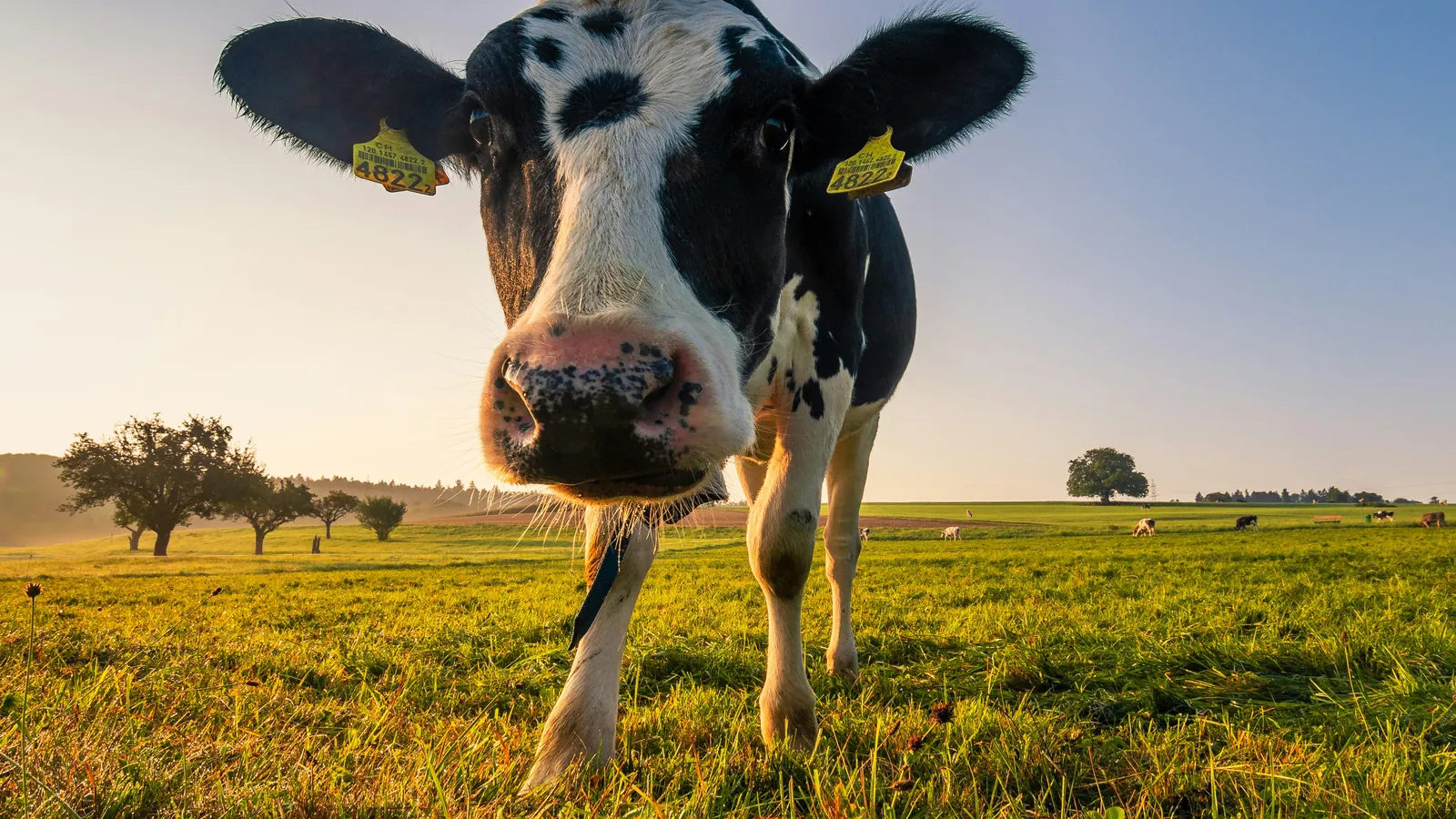
This page is The Field Guide's list of farms and butchers in the Netherlands selling grass-fed and outdoor-raised meat, each one checked by us and grouped by province. Beef, lamb and goat meat are on this page when the farm is certified organic or Demeter, or the animals graze in the grazing season and eat mainly grass and forage. Pork and poultry qualify with organic certification, Beter Leven 3 stars (2 for chicken) or outdoor access, with grain feed allowed. Wild game must be shot in the Netherlands with the place stated. We check each animal species separately, and list butchers only when they name source farms that meet the same bar.
What cattle eat shows in the meat: grass-fed beef has a different fat profile from grain-finished.
146 producers · every one checked against our inclusion criteria
Open on the map →146 producers across 5 provinces, most of them in Utrecht (53), Gelderland (49) and Noord-Holland (24). Each entry opens the producer's own page with what we checked, when we checked it, opening hours and how to buy; the names are listed by province, town by town, and the map lets you search the same list by postcode.
visited by moss & marrowFarm · DoorwerthBeef · cow's milk, butter, cheese · bones & organ meats · veg & fruit · bread & grainvisited by moss & marrowFarm · AssenBeef, lamb, goat, turkey · bones · organ meats · bone brothGrass-fed is grasgevoerd in Dutch, and 100% grass-fed is 100% grasgevoerd. Neither term has a legal definition in the Netherlands or the EU. Our 100% grass-fed filter means cattle, sheep or goats that eat only grass: pasture in the grazing season, hay and silage in winter, with no grain or soy, including the last months before slaughter. We mark it only where the farm states it. How we handle feed.
Grass-fed says what the animal ate for part of its life; grass-finished says what it ate in the last months before slaughter. Most cattle eat grass as calves and are then fattened on grain, maize or concentrate, and neither term has a legal definition in the Netherlands or the EU, so a farm can call its beef grass-fed and still finish it on grain. That is why our filter is 100% grass-fed, and we mark it only where the farm states the whole diet, including the finishing months. If a listing doesn't say, ask the farm what the animals ate in their last three months.
Buy direct from farms that say how their animals live: cattle and sheep grazing in the grazing season, pigs and chickens with outdoor access, and the farm's own animals. Organic (biologisch) certification requires outdoor access, but many grazing farms aren't certified, so ask. Every farm on our meat page has animals that graze or go outdoors, or is certified organic, and each listing names the animal we checked. The grazing / outdoors filter narrows it to farms whose animals are outside in the grazing season, and the goes-the-extra-mile mark (what's this?) shows farms that do more, such as keeping calves with their mothers.
Heritage breeds (oude rassen) are older, slower-growing breeds such as Blaarkop, Lakenvelder or Brandrode cattle, Bonte Bentheimer pigs and Veluws Heideschaap sheep, kept before farming selected for fast growth and high yield. Farms keep them because they suit grazing on poor land, nature reserves and herb-rich grassland, and because keeping the breed alive is part of their purpose. Our heritage breeds filter shows farms that name the breed on their website.
Regenerative farming has no legal definition. Farms use it for practices that build soil rather than deplete it: herb-rich grassland, rotational grazing, no ploughing, cover crops, trees in the fields. Because the word is open, we don't judge it ourselves; the regenerative filter shows farms that describe their own farming that way or name those practices on their website, and each listing says which.
Around Utrecht, as across the Netherlands, grass-fed beef is mostly sold direct by farms with their own grazing cattle, from a farm shop, a webshop with pickup days or as a meat box. Grass-fed has no legal definition, so ask whether the cattle eat only grass, including before slaughter. On our map, the 100% grass-fed filter shows farms that state their cattle eat only grass, or browse grass-fed and outdoor-raised meat for every farm whose animals graze in the grazing season.
Pasture-raised has no legal definition here, so look for farms that say where the animals live: a free-range run, woodland or pasture, with the pigs or chickens outside by day. Pork and poultry are on our meat page when the farm states that outdoor access, holds Beter Leven 3 stars or is certified organic; indoor systems, including 1 star, aren't included. Browse grass-fed and outdoor-raised meat and the listing tells you which animal we checked and what the farm says about it.
No. Organic (biologisch) is a legal EU standard: no synthetic pesticides or fertiliser, organic feed, outdoor access and an annual inspection. Grass-fed describes what the cattle eat, and an organic farm may still feed some grain. In the Field Guide, beef is included when the farm is certified organic or when its cattle graze in the grazing season and eat mainly grass and forage, so many listed farms are grazing farms without a certificate. Organic status explained.
Biologisch (organic) is a legal EU standard covering the whole farm: no synthetic pesticides or fertiliser, organic feed and outdoor access, checked by SKAL. Beter Leven is the animal welfare label of the Dierenbescherming, with one to three stars, and says nothing about pesticides or whether the feed is organic. We check organic claims in the EU organic register, and show Beter Leven stars on a listing where a farm has the label. Beter Leven in the Field Guide.
Beter Leven gives one to three stars; more stars mean more space and welfare requirements for the animals. In the Field Guide, 3 stars is included for every animal and 2 stars for chicken, beef and dairy. Pork and veal with 2 stars aren't included because the run can be covered or paved, and 1 star is never included. How we use Beter Leven.
On chicken meat, scharrel on its own (extensief binnen gehouden) means the birds are kept indoors with more space, and the same word on eggs means barn hens, code 2. Terms with uitloop, such as scharrel met uitloop or vrije uitloop, mean the birds have outdoor access. Biologisch (organic) chickens also have outdoor access and get organic feed. Chicken in the Field Guide comes from birds with outdoor access, a free-range run, woodland or pasture.
Some Dutch farms sell beef by share of an animal or as a meat box (vleespakket), which you usually order ahead and collect on a set day, fresh or frozen. A share is a mix of cuts, and you can ask the farm for the bones and organ meats too. Each listing on our meat page says how that farm sells, such as a farm shop, webshop, pickup points or delivery, where the farm publishes it.
Many farms that sell their own beef, lamb, pork or chicken also sell marrow bones, soup bones, liver, heart, tongue or fat such as lard and tallow. In the Field Guide these are included when they come from animals that meet our meat criteria, and each listing names them separately. Browse grass-fed and outdoor-raised meat and look for bones and organ meats on the listing, or ask the farm, since these often sell out.
Growth hormones are banned for all farm animals in the EU, and since January 2022 EU law (Regulation 2019/6) bans preventive antibiotics for groups of animals, so every Dutch farm complies. Treating a sick animal is still allowed, organic farms included. Because the law already covers both, our criteria look at outdoor access, grazing and whose animals they are instead. Our inclusion criteria.
Look the farm up in the EU organic operator register, where SKAL certificates are published, or in Demeter's register for biodynamic farms. Biologisch is a protected term, so a farm may only use it with a certificate. We check every organic claim in these registers and match it on the farm's address. Farms that farm without synthetic pesticides or fertiliser but aren't certified are shown as "organic methods, not certified". How we check organic status.
Beef, lamb and goat meat are included when the farm is certified organic or Demeter, or the animals graze in the grazing season and eat mainly grass. Pork and poultry are included when the farm is certified organic, has Beter Leven 3 stars, or the animals have outdoor access; grain feed is allowed. Animals kept indoors all year aren't included, and butchers are included only when they name source farms that meet these criteria. Full criteria.
Not always, because some game sold in the Netherlands is imported. In the Field Guide, wild game is included only when it was shot in the Netherlands and the seller states where, whether that is the hunter, an estate or a game dealer. Imported game and game with no stated origin aren't included, and farmed deer and wild boar are assessed like other farm meat. Grass-fed and outdoor-raised meat.