 The Field Guideby Moss & MarrowThe Field Guideby Moss & Marrow
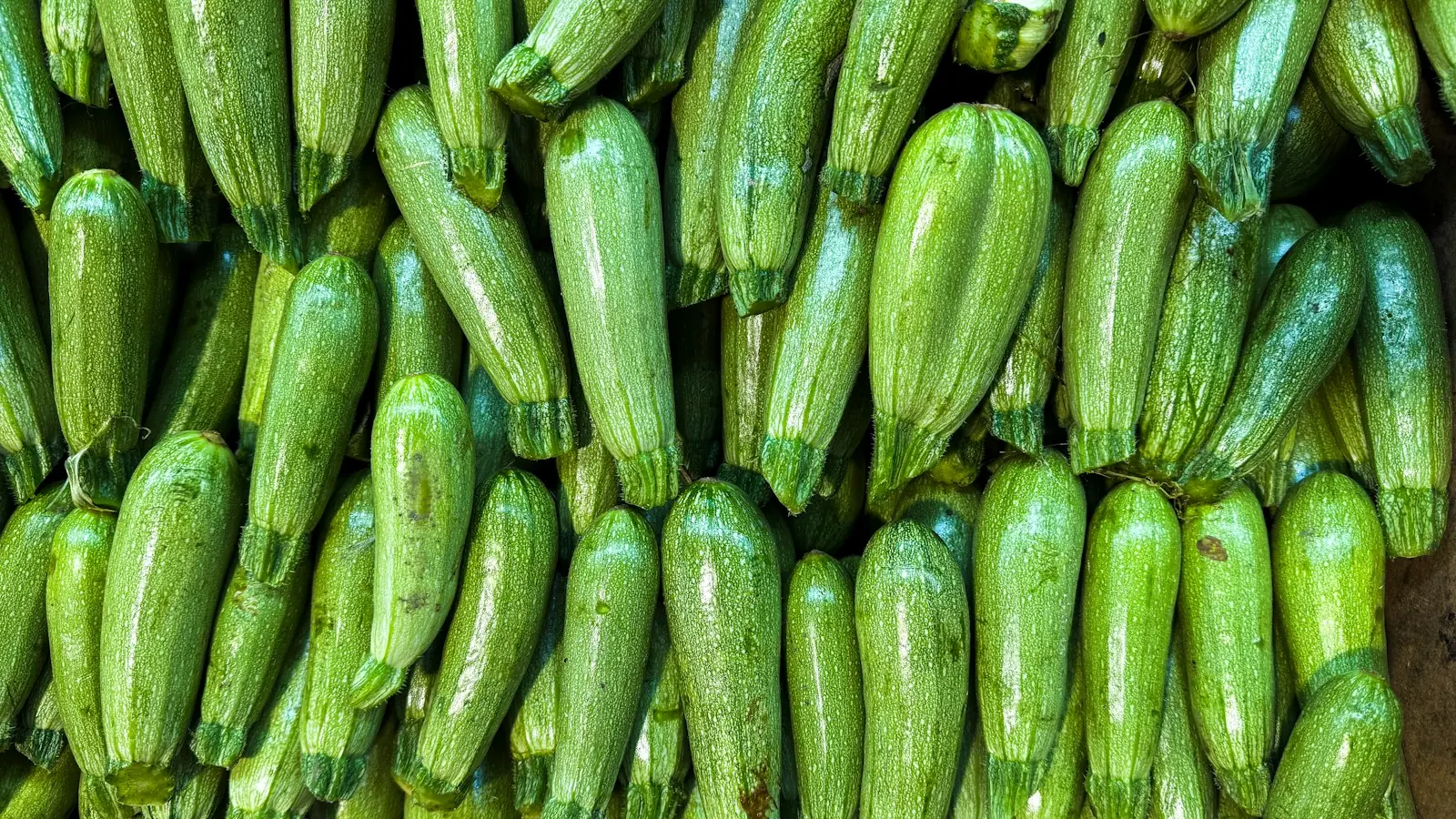
Also called courgettes.
In the Netherlands, courgettes are in season June to October, at their best in July and August. November is outside the Dutch season for courgettes.
Dutch courgettes are an open-field crop from June to October. Spring and late-autumn courgettes come from heated glass or Spain.
Small and heavy for their size, with a glossy skin. The flowers are sold by some growers in early summer.
Mostly water, with vitamin C, potassium and some beta-carotene in the skin. About 95 percent water with potassium and magnesium: hydration with electrolytes.
To get the most: Keep the skin on and cook briefly, or eat raw grated; the little vitamin C there is lives near the skin.
On our nutrient density chart, a normal serving of cooked courgette (150 g) gives about a fifth of a day's vitamin C and about a tenth of a day's potassium, counting what your body absorbs.
Content per NEVO, the Dutch food composition database. This describes what the food contains, not what it does for you.
Griddle in slices, grate raw into a salad, or stew slowly with tomatoes and garlic. Big ones are best stuffed.
Skin, seeds and flowers are all edible. Stuff the flowers, and grate a monster courgette into fritters or a cake.
32 producers in The Field Guide sell courgettes, according to their own website or shop list, each checked against our inclusion criteria and listed by province. Another 149 growers passed our bar for this food group; we have not yet recorded what each of them grows, so ask them or search the map.
Open on the map →Dates read on 2026-10-11. If a window on this page is wrong, tell us with a source.
 guideWhy choose local and seasonal food?Food picked ripe in its own season carries more vitamins, travels days instead of weeks and keeps good farms in business. Twelve reasons, with the evidence.Read the guide →
A free list of what’s in season this month, then one slow email a month with seasonal tips and goodies.