 The Field Guideby Moss & MarrowThe Field Guideby Moss & Marrow
Lees deze pagina in het Nederlands →
Also called kersen, hollandse kersen.
In the Netherlands, cherries are in season June to July, at their best in July. November is outside the Dutch season for cherries.
Dutch cherries ripen in June and July, mostly in the Betuwe and Limburg. The season is short and many growers sell at the orchard gate or let you pick.
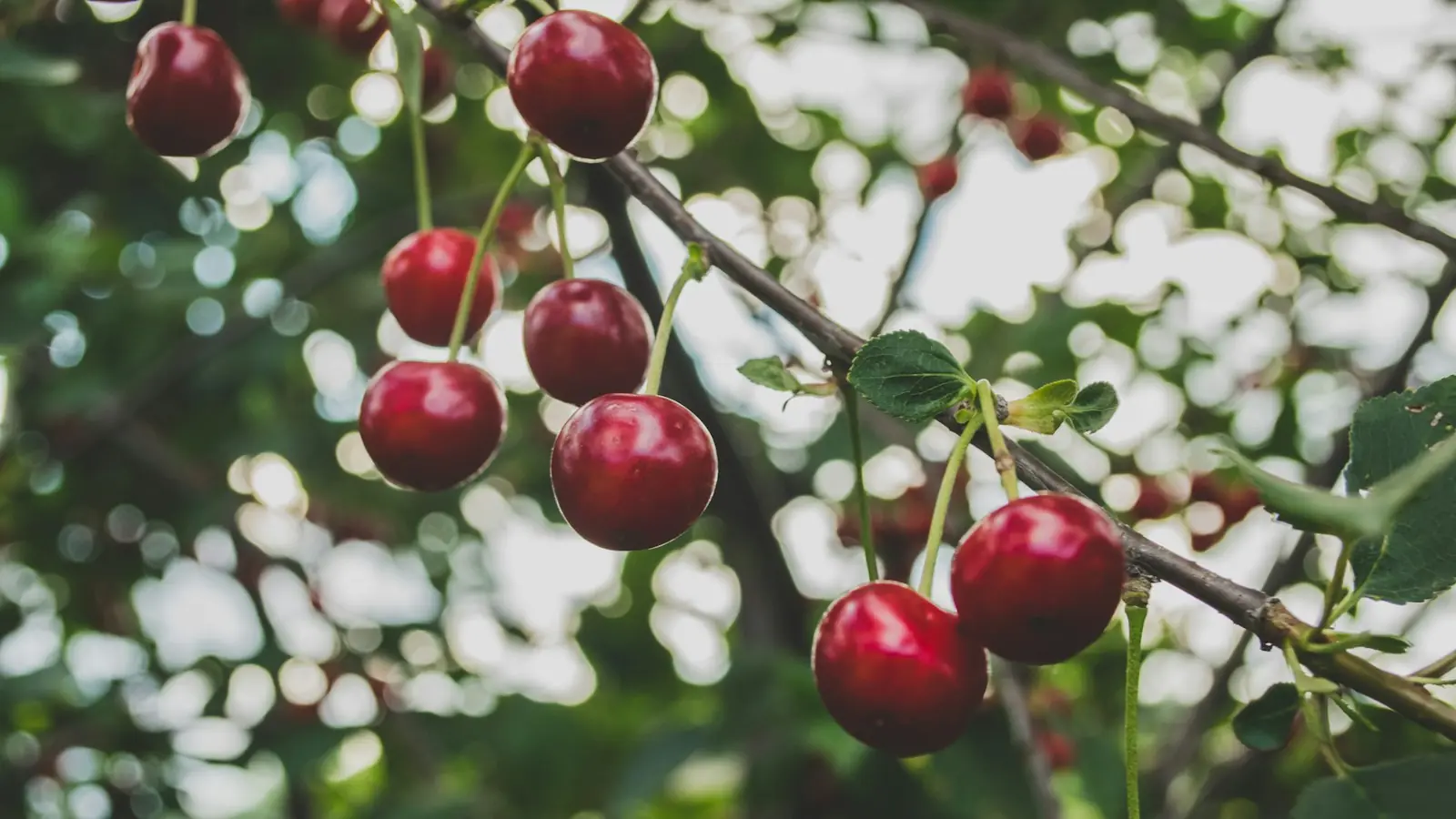
Glossy with a green, flexible stem. Stems that are dry and brown mean old fruit.
Vitamin C, potassium and anthocyanins, more in darker cherries; sour cherries carry more polyphenols than sweet.
To get the most: Fresh and raw for the vitamin C. The pigments survive freezing well, so freeze pitted cherries for later.
On our nutrient density chart, a normal serving of cherries (140 g) gives about a tenth of a day's vitamin C and about a tenth of a day's potassium, counting what your body absorbs.
Content per NEVO, the Dutch food composition database. This describes what the food contains, not what it does for you.
Eat fresh, or pit and stew for a few minutes with a little sugar. They freeze well pitted.
Stones go on the compost; a few cracked in a compote add an almond note. Stems can steep as a tea.
11 producers in The Field Guide sell cherries, according to their own website or shop list, each checked against our inclusion criteria and listed by province. Another 171 growers passed our bar for this food group; we have not yet recorded what each of them grows, so ask them or search the map.
Open on the map →36 farms in the guide open their fields for picking. Opening days follow the ripening, so check the farm's own page or social media the week you want to go.
visited by moss & marrowFarm · WageningenVeg & fruitDates read on 2026-10-11. If a window on this page is wrong, tell us with a source.
 guideWhy choose local and seasonal food?Food picked ripe in its own season carries more vitamins, travels days instead of weeks and keeps good farms in business. Twelve reasons, with the evidence.Read the guide →
A free list of what’s in season this month, then one slow email a month with seasonal tips and goodies.