 The Field Guideby Moss & MarrowThe Field Guideby Moss & Marrow
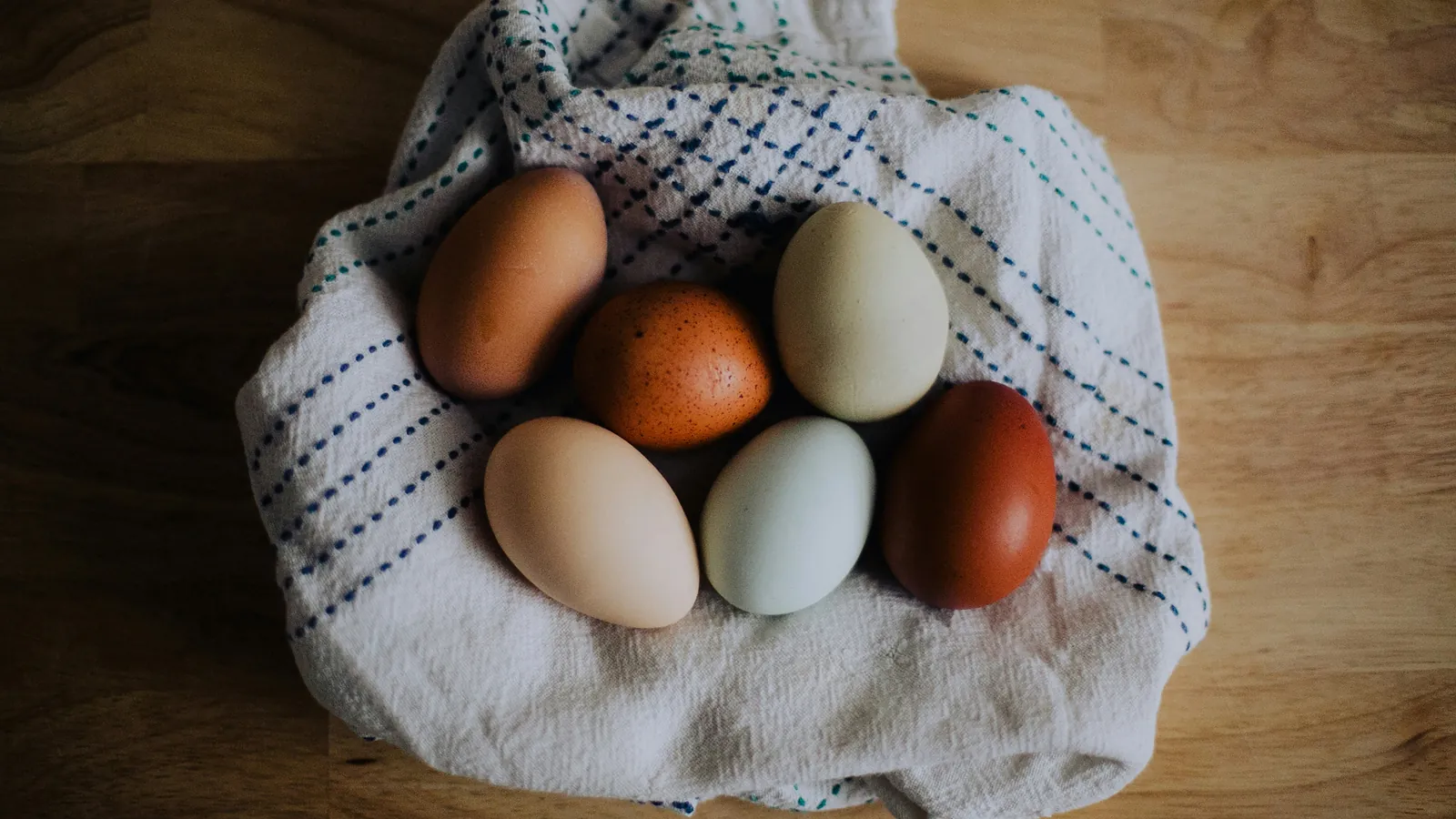
This page is The Field Guide's list of farms in the Netherlands selling free-range and organic eggs from their own hens, each one checked by us and grouped by province. Eggs are on this page when they are code 0 (organic) or code 1 (free range, vrije uitloop), which is at least the equivalent of Beter Leven 2 stars for laying hens, whether or not the farm has the label. Barn eggs (scharrel, code 2) and cage eggs (code 3) aren't included, because in the Netherlands scharrel means the hens stay indoors.
Hens with an outdoor run eat grass and plants as well as feed, and those plants are what gives a pastured yolk its colour.
56 producers · every one checked against our inclusion criteria
Open on the map →56 producers across 5 provinces, most of them in Gelderland (26), Utrecht (16) and Noord-Holland (7). Each entry opens the producer's own page with what we checked, when we checked it, opening hours and how to buy; the names are listed by province, town by town, and the map lets you search the same list by postcode.
The code stamped on each egg starts with a digit for how the hens are kept: 0 is organic, 1 is free-range, 2 is barn and 3 is caged. After it come NL for the country and the registration number of the farm, so every egg can be traced to where it was laid. Only codes 0 and 1 are included in the Field Guide. Free-range and organic eggs on the map.
No. In the Netherlands scharrel means barn eggs, code 2: the hens move around loose inside a shed but don't go outdoors. The Dutch for free-range is vrije uitloop, code 1, where the hens have an outdoor run. Because scharrel hens stay indoors, scharrel eggs aren't included in the Field Guide, even when they come from a farm's own hens. Our criteria for eggs.
Scharrel (barn, code 2) hens are kept loose indoors. Vrije uitloop (free-range, code 1) hens also have daytime access to an outdoor run, with at least 4 square metres per hen under EU rules. Biologisch (organic, code 0) hens have outdoor access too and get organic feed, and the farm is inspected for its organic certificate. Codes 0 and 1 are included in the Field Guide, and code 2 isn't. Find free-range and organic eggs.
Beter Leven is the animal welfare label of the Dierenbescherming (the Dutch society for the protection of animals). For laying hens, 1 star means a covered outdoor run only, while 2 and 3 stars add a free-range run outside, and 3 stars also means fewer hens per square metre. Organic eggs qualify for 3 stars automatically. Every egg in the Field Guide is at least the equivalent of 2 stars, whether or not the farm has the label. Beter Leven in the Field Guide.
Biologisch (organic) is a protected term under EU organic law, so eggs may only be sold as organic by a certified farm, checked by SKAL. The hens get organic feed and have an outdoor run, and the eggs carry code 0. We check every organic claim in the EU organic register, and our certified organic filter shows only the egg farms we found there.
Demeter is the international biodynamic standard. A Demeter farm is certified organic as well, and the standard asks more, such as converting the whole farm and growing at least half the animal feed on the farm itself. We check Demeter certificates in Demeter's register, and the biodynamic filter shows the egg farms listed there.
Many farms sell eggs from their own hens in a farm shop, at a stall by the road or from an egg vending machine (eierautomaat) that takes card or coins. Our map shows the farms whose hens are free-range or organic, and the self-service filter narrows it to vending machines and stalls that work without staff. Each listing gives the opening hours where the farm publishes them.
Hens eat grain and other feed as well as what they find outdoors, so the feed is worth asking about. Our organic or own-grown feed filter shows farms that state their hens get organic, GM-free or home-grown feed and say nothing about bought-in conventional feed. Feed isn't part of our criteria for eggs because most farms don't publish it, so we ask them and add it when they tell us.
It means the farm uses no synthetic pesticides or fertiliser on its fields and pasture. It says nothing about what the hens eat, which may be bought-in conventional feed, so it isn't the same as organic (biologisch), which also requires organic feed and a certificate. Our filter shows egg farms that state this, together with certified organic farms, and sits a step below the Organic methods filter, which also asks for organic, GM-free or home-grown feed. Egg farms with no synthetic sprays or fertiliser.
Eggs are included when they carry code 0 (organic) or code 1 (free-range, vrije uitloop) and come from the producer's own hens or a named farm. Barn eggs (scharrel, code 2) and caged eggs (code 3) aren't included. Codes 0 and 1 are at least the equivalent of Beter Leven 2 stars, because the hens have an outdoor run. The full criteria are on our inclusion criteria page.
Some farms sell eggs from their own hens that we haven't been able to check yet, or that come from hens kept indoors. We still name them on the listing, in grey and marked unverified, because they are the farm's own, but they are left out of the filters and the counts. A farm needs at least one product that meets our criteria to be on the map. How to read a listing.
Growth hormones are banned for all farm animals in the EU, and since January 2022 EU law (Regulation 2019/6) bans preventive antibiotics for groups of animals, so every Dutch egg farm complies. Treating sick hens is still allowed, organic farms included. Because the law already covers both, our criteria for eggs look at outdoor access instead. Our inclusion criteria.