 The Field Guideby Moss & MarrowThe Field Guideby Moss & Marrow
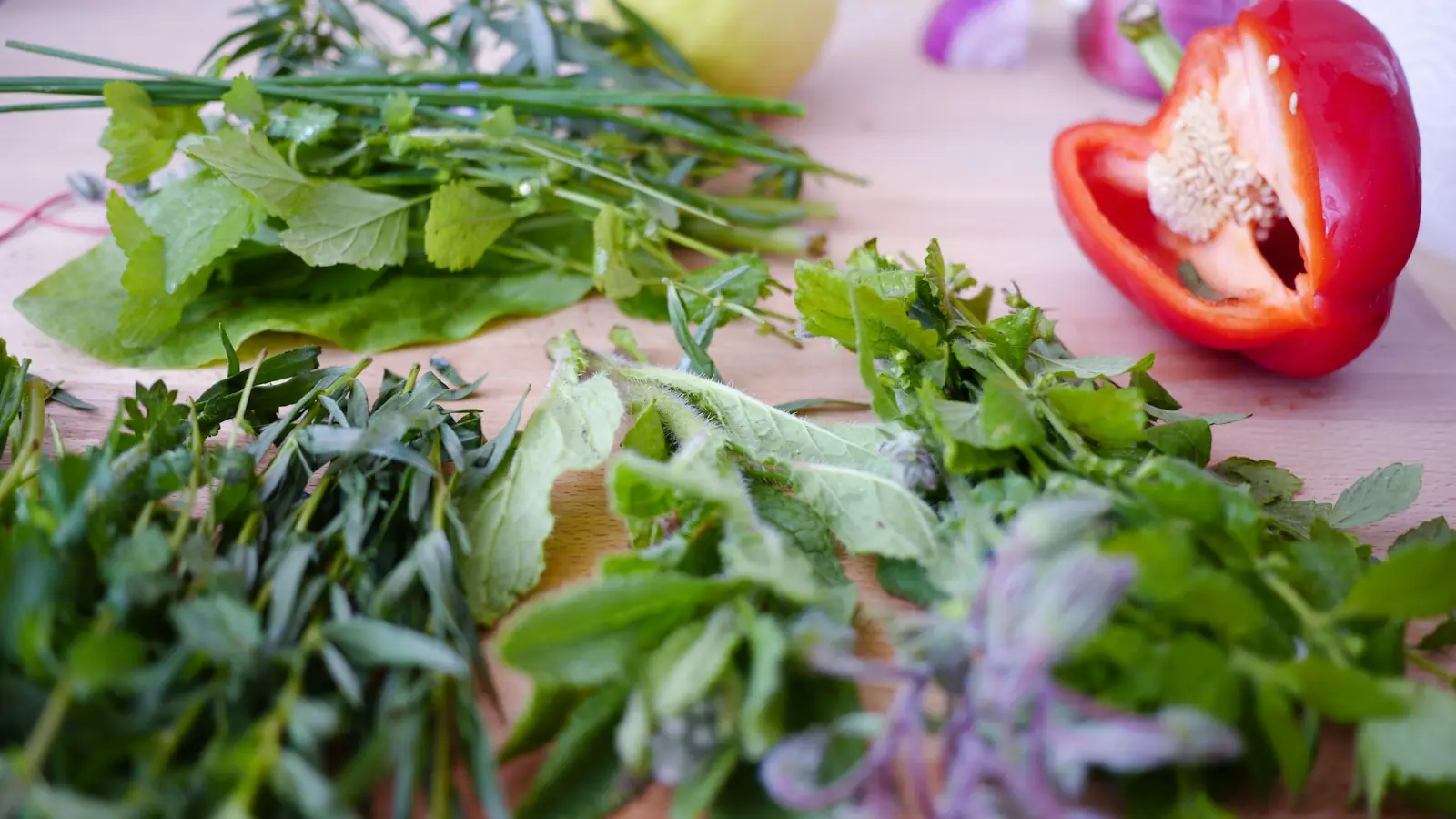
Also called kruiden, peterselie, bieslook, dille, basilicum, munt, koriander.
In the Netherlands, garden herbs are in season May to October, at their best in June, July and August. November is outside the Dutch season for garden herbs.
Soft herbs such as parsley, chives, dill, mint and coriander grow outdoors from May to October. Pot herbs under glass are sold all year.
Bunched herbs with a cut stem are from the field; herbs in a pot are glasshouse plants.
Parsley is high in vitamin K, vitamin C and iron; chives and dill add vitamin C and carotene; all bring volatile oils and polyphenols in small, frequent amounts.
To get the most: Add soft herbs at the end or raw; heat drives off the oils and most of the vitamin C. Chop the stalks in too.
On our nutrient density chart, a normal serving of parsley (10 g) gives more than a day's vitamin K and about a fifth of a day's vitamin C, counting what your body absorbs. Its oxalate binds much of the calcium and iron, and the score counts that.
Content per NEVO, the Dutch food composition database. This describes what the food contains, not what it does for you.
Stand bunches in water in the fridge. Chop the stalks too; they carry much of the flavour.
Stalks carry much of the flavour: chop soft stalks in with the leaves, and simmer tougher ones in stock. Flowers are edible.
64 producers in The Field Guide sell garden herbs, each checked against our inclusion criteria and listed by province.
Open on the map →Dates read on 2026-10-11. If a window on this page is wrong, tell us with a source.
 guideWhy choose local and seasonal food?Food picked ripe in its own season carries more vitamins, travels days instead of weeks and keeps good farms in business. Twelve reasons, with the evidence.Read the guide →
A free list of what’s in season this month, then one slow email a month with seasonal tips and goodies.